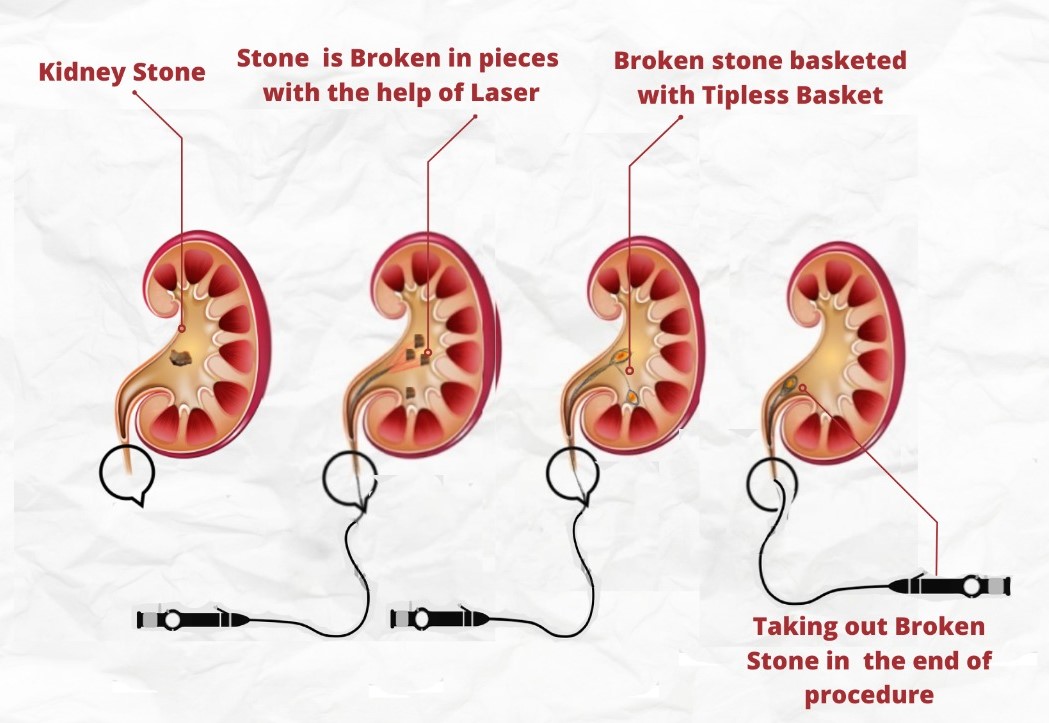
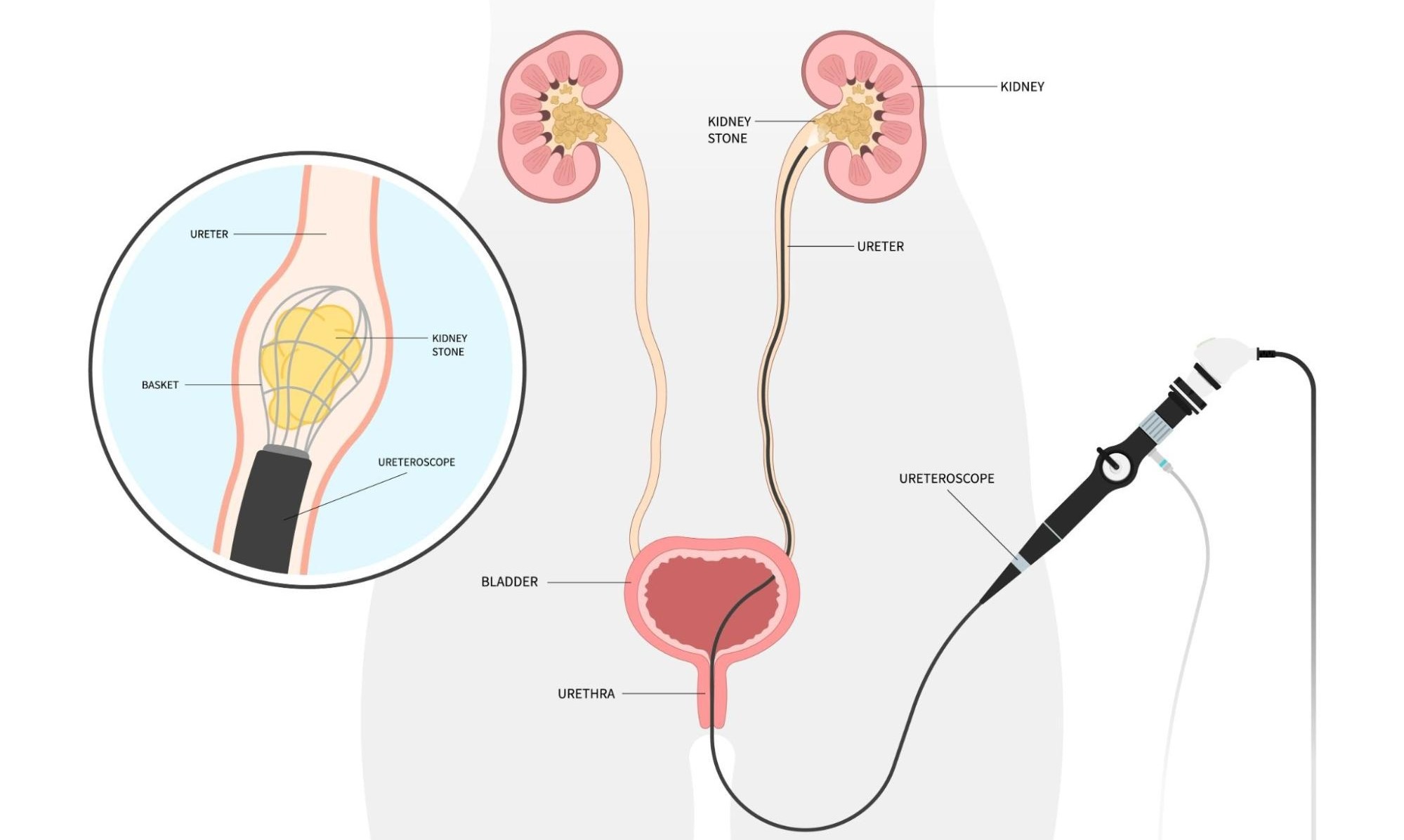
Freedom from Kidney Stones with Advanced RIRS
Read summarized version with :
Kidney stones can be intensely painful, disruptive to daily life, and if left untreated,
can damage kidney function. Fortunately, advances in urology now mean that many stones can be treated with
minimally invasive techniques. One of the most effective among these is Retrograde Intrarenal Surgery
(RIRS) — giving many patients freedom from kidney stones with less discomfort and quicker recovery.

Who Is a Suitable Candidate?
- Inside the kidney or upper ureter particularly less than ~2 cm in size
- In patients who want to avoid open surgery or percutaneous (through skin) methods
- Who may be at higher risk for bleeding or with anatomical challenges, since RIRS is less invasive
and has fewer risks of bleeding than more invasive surgeries
Risks, Limitations & Recovery
- Some patients may have residual stone fragments that need to pass naturally or be removed in a
second session.
- Risk of infection, haematuria (blood in urine), possible ureter injury, stent discomfort. These
are uncommon or mild in most cases with good care.
- Not always the best option for very large stones (>2-3 cm) or stones in certain hard-to-reach
branches of the kidney. In such cases, PCNL (percutaneous nephrolithotomy) or other techniques might
be better.
- Recovery often involves a ureteric stent for a time, adequate hydration, pain management, and
follow-ups to ensure all stone material is cleared.
Conclusion
For many patients, RIRS offers a pathway to freedom from kidney stones with much less
pain, shorter recovery, and excellent outcomes. If you or a loved one suffer from kidney stones, ask
your urologist whether you are a candidate for RIRS. Early treatment and proper follow-up can restore
comfort, protect kidney health, and let you return to normal life sooner.